How to brew French Press coffee
The French press is a simple and forgiving method, and makes great coffee.
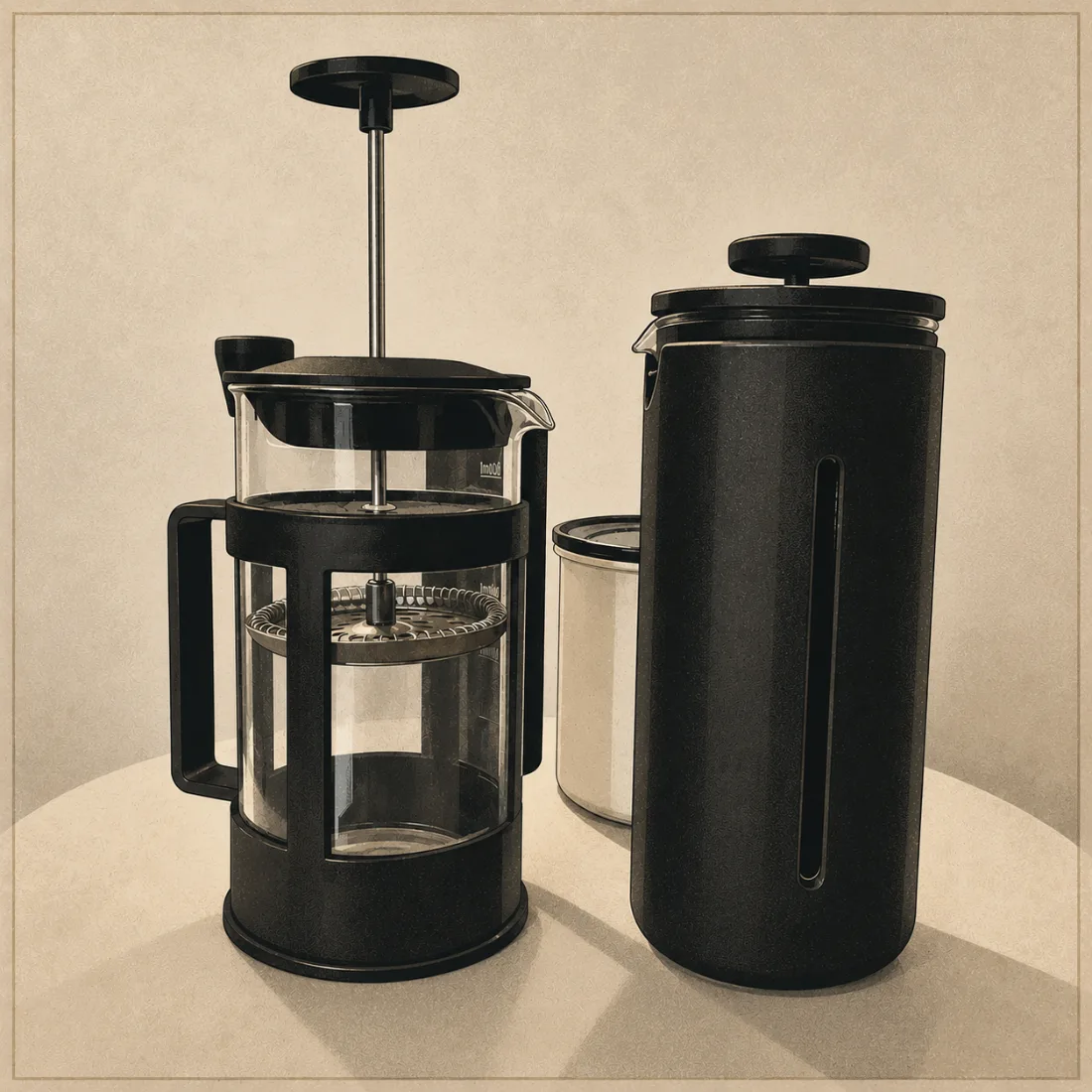
The French Press is a relatively easy brewing method, and also a fairly complete system in itself - you don't need to carry paper filters (like a pour over), nor do you mandatorily need a stovetop or induction heating (like the Moka pot). This makes it ideal as a travel brewer as well. It is also a great way to make overnight cold brew coffee.
Equipment Needed
Apart from the French press itself, here's the equipment I use and recommend. Even though I list some must haves, you can make a decent brew with only the French press and pre-ground coffee. However, if you want to get good coffee, the equipment helps.
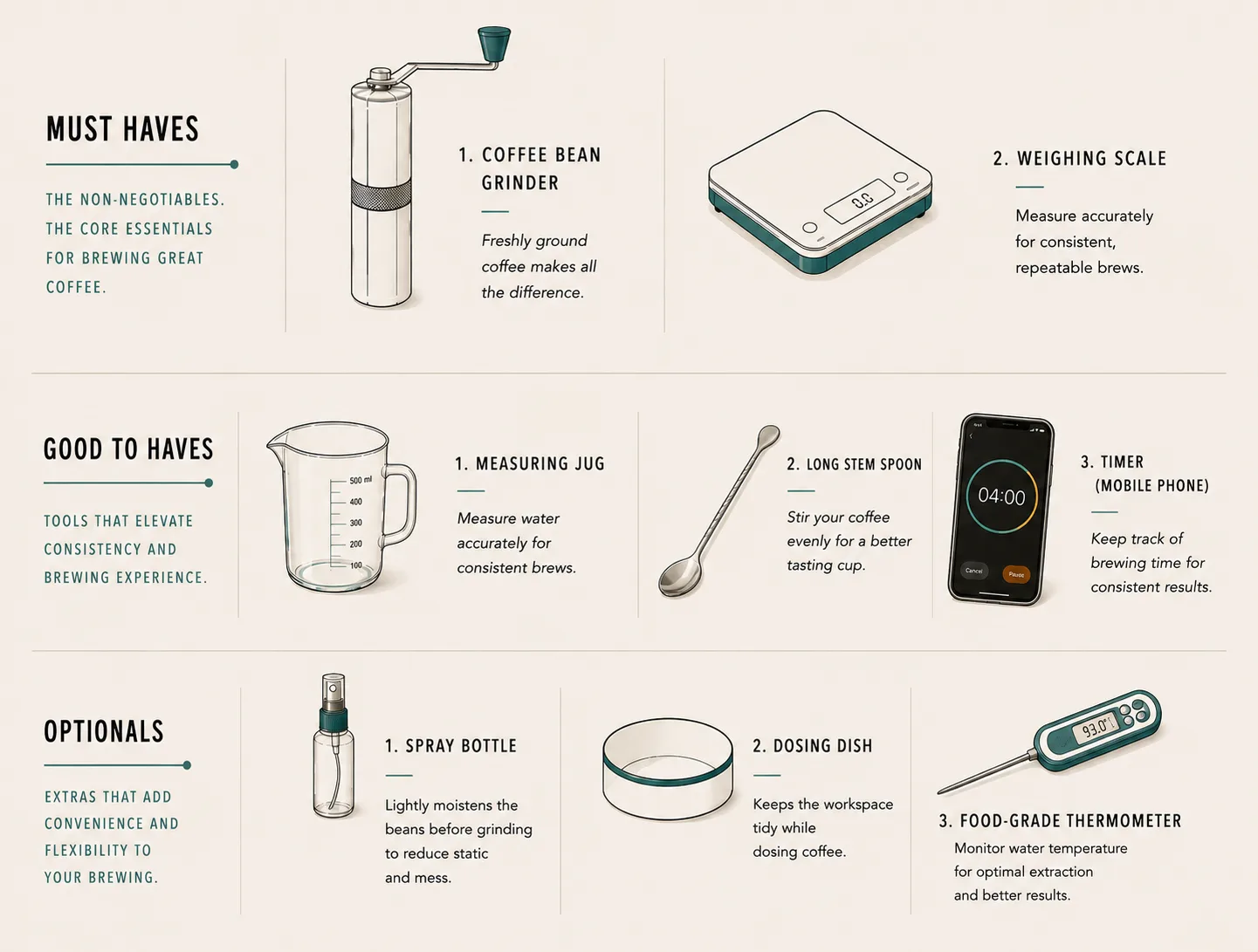
Must Haves
- Coffee Grinder - I can never recommend a good coffee grinder enough. No matter what brewing method you use, nothing beats freshly ground coffee.
- Weighing scale - The French press benefits from maintaining a proper coffee to water ratio. The weighing scale helps here.
Good to haves
- Measuring Jug - Same reason as the weighing scale - this helps you maintain a good coffee to water ratio. Why is this not a must then? Mainly because most French presses come pre-marked with a scale on them, and you can make that work for you. I will explain below.
- Long-stemmed spoon - Good to stir the coffee before pouring it out.
- A timer - If you want to be consistent with your steep time.
Optionals
- Spray Bottle - Read here why I recommend a spray bottle
- Dosing dish - A vanity item. Measure your beans in one for that coffee vibe.
- Food-Grade thermometer - Only if you want to be in full control.
The Process
- Weigh your beans - For a hot coffee, a coffee to water ratio of 1:14-1:15 works well. You may need to tweak this based on your coffee's roast profile and how strong you like it, but 1:15 is a good place to start. If you want to make 300 ml coffee, weigh out 20g of coffee beans.
- Grind! - The French press is wholly dependent on the contact between hot water and coffee grounds for extraction - the coffee grounds "stay" in the water the whole time. This calls for a very coarse coffee grind - more surface contact between coffee and water. I use the grind setting 20 on my Timemore C3S grinder.
- Pre-measure the water - Either use the scale on the French press (if it has one) or the measuring jar. You could pour water upto the 300ml mark (going with the same example as above) after adding the grounds, but with the coffee bed, there are chances of errors. Not a big deal, but if you are a stickler for accuracy, pre-measure your water.
- Heat the water - Put the measured water to boil! The French press works well at 90+ degrees.
- Prime the press - Pull out the plunger assembly fully, then pour the coffee grounds in. Gently tap the press on the table so that the grounds settle into a nice flat cake at the bottom.
- Pour the water - Once the water has started boiling, turn off the heat and wait for 40-50 seconds. Don't use water straight off the heat - it may be too hot and cause over-extraction. The thermometer is good at this stage - let the water reach around 90-95 degrees. With the plunger assembly still out, pour a little bit of water - just enough to cover the coffee cake. This releases the carbon dioxide from the coffee grounds and can potentially make the coffee better. Wait for 30s, then pour the rest of the water in slow circles.
- Let it steep - This step is important - it is when the extraction happens. I set a timer for 4 minutes on my phone the first time for a new coffee, then adjust it based on the results.
- Push the plunger - Once the timer goes off, gently push the plunger down. Very slowly - don't rush it, you don't want to agitate the coffee. Some people recommend not pushing the plunger in at all and just pouring the coffee as it is - it anyway gets filtered. Try both ways - see what you like.
- Stir and pour - After pushing in the plunger, give the coffee a very gentle stir ONCE with the long stemmed spoon. This is entirely optional, the plunger actually does this for you, but I sometimes do it to ensure the brew is homogeneous if I am pouring multiple cups. Again, do not agitate the coffee - the fine grounds can rise up and end in your cup, ruining your experience.
- Enjoy your coffee!
Cold Brew
The French press is great for overnight cold brews. The process is exactly the same as above - but the coffee is left to steep overnight in the press, in a refrigerator. Usually a coffee ratio of 1:18 to 1:20 is good, due to the long steep time.
Traveling
The French press is a great brewer when traveling. You can take a pack of pre-ground coffee and the press and you are set. Get a rough idea where the coffee cake rests at the bottom of the press when measured precisely, and how much water do you need on top of that. Eyeball these measurements and you will be good. The French press can be quite forgiving.